

Castor Oil Packs: A Simple Guide to This Traditional Naturopathic Practice

🌿 How to use a castor oil pack, where to apply it, when to use it and how to make it part of your self-care routine.
Sometimes, the simplest self-care practices are the ones that encourage us to slow down, tune into our bodies and create a little space for rest.
Castor oil packs are a traditional practice used in naturopathic and complementary health settings. They involve applying castor oil to a piece of cloth, placing it against the skin and allowing it to sit for a period of time, sometimes with gentle warmth.
You may have heard of castor oil packs being used over the abdomen, liver area or pelvis. They are traditionally incorporated into naturopathic approaches to supporting digestion, liver function, lymphatic flow, menstrual wellbeing and relaxation.
But what exactly is a castor oil pack, how do you use one, and how can you tailor the practice to your individual needs?
What is a castor oil pack?
Castor oil is a thick vegetable oil obtained from the seeds of the castor plant (Ricinus communis). It contains a high proportion of ricinoleic acid, a fatty acid that contributes to its distinctive properties.
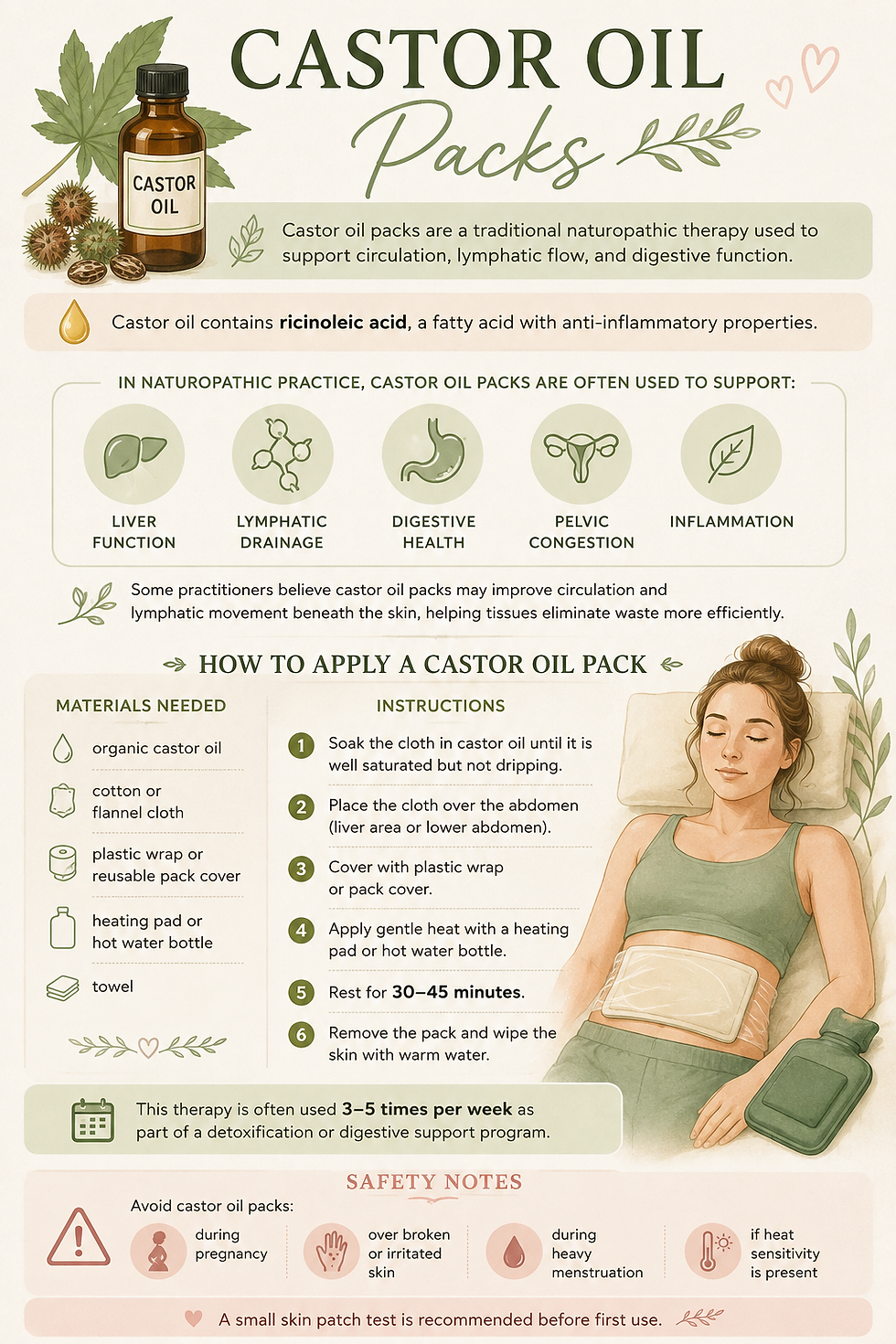
A traditional castor oil pack generally consists of:
Castor oil, preferably from a reputable supplier.
A piece of soft cotton or wool flannel, or a purpose-made reusable pack.
An old towel to protect your clothing and bedding.
Optional gentle warmth, such as a warm water bottle wrapped in a towel.
Unlike simply applying oil to the skin, a pack allows the oil to remain in contact with a particular area for a period of time.
In naturopathic practice, the pack is traditionally used as a supportive measure, with the placement, duration and frequency adapted to the individual and the reason for using it.
Why do naturopaths use castor oil packs?
Castor oil packs are traditionally used over different areas of the body depending on the person's health picture and the practitioner's approach.
1. The abdominal and liver area
One of the most common placements is over the upper right abdomen, where the liver is located.
The liver is one of the body's major processing organs. It plays an essential role in metabolising hormones, medications and environmental compounds, producing bile and supporting many other metabolic processes.
In traditional naturopathic practice, castor oil packs over the liver area are used with the intention of supporting liver function, bile flow and the body's natural elimination processes.
The liver and digestive system work closely together. Bile carries certain substances from the liver into the digestive tract, where some can ultimately be eliminated through the bowel. Supporting overall digestive health and regular bowel function is therefore an important part of a broader naturopathic approach.
Castor oil packs are not a replacement for addressing nutritional needs, reducing avoidable environmental exposures or investigating possible liver or digestive concerns. Rather, they may be incorporated into a wider self-care routine where appropriate.
2. The lower abdomen and pelvic area
Castor oil packs are also traditionally used over the lower abdomen and pelvic region.
In naturopathic practice, they may be considered as part of a broader approach to menstrual wellbeing, abdominal tension and pelvic self-care.
Some people enjoy the warmth and relaxation associated with applying a pack to this area, particularly when they set aside time to rest.
Timing is worth considering, especially if you experience heavy menstrual bleeding or have a complex pelvic health history. We will explore this in more detail below.
3. General relaxation and self-care
Sometimes, the value of a self-care ritual is the opportunity to stop, rest and pay attention to how you are feeling.
Setting aside time to lie comfortably, apply gentle warmth and relax may be a welcome addition to your routine.
You do not need to turn castor oil packs into another task to perfect. They can simply be one way of creating a little space for yourself.
How to use a castor oil pack at home
If you would like to incorporate castor oil packs into your self-care routine, here is a simple step-by-step guide.
What you will need
A small amount of castor oil (preferably hexane free)
A soft cotton or wool flannel, or a purpose-made castor oil pack.
An old towel to protect your clothing and bedding.
A container for storing your pack if you intend to reuse it.
Optional gentle warmth, such as a warm water bottle wrapped in a towel.
Step 1: Choose your area
Choose a comfortable area where you can lie down or rest without being disturbed.
For a general self-care session, people commonly place a pack over the abdomen. If you are considering using one for a particular health concern, the placement can be discussed with your naturopath or other appropriately qualified practitioner.
Step 2: Apply the oil
Place the flannel on a protected surface and add a small amount of castor oil until the material is lightly coated but not dripping.
You do not need to saturate the cloth. Using less oil helps minimise mess and makes clean-up easier.
Step 3: Position the pack
Place the oiled side against the chosen area of intact skin. Cover it with a protective layer or towel to help contain the oil.
Make sure you are comfortable and that the pack is not pressing uncomfortably on your abdomen.
Step 4: Add gentle warmth if desired
Some people prefer to place a warm water bottle over the pack.
Keep the temperature comfortably warm rather than hot, and place a protective layer between the heat source and your skin. Never fall asleep with a heat source in place, as prolonged heat can cause burns.
You can also use the pack without additional heat.
Step 5: Rest and relax
Settle somewhere comfortable and allow yourself some quiet time.
There is no need to rush or to make the session longer than feels appropriate for you. You can use the time to rest, listen to music or simply enjoy a break from the busyness of the day.
Step 6: Finish and clean up
Remove the pack and gently wipe excess oil from the skin with a soft cloth. Wash the area if needed, and clean up any oil on surrounding surfaces to prevent slipping.
Store a reusable pack according to the manufacturer's instructions. Replace it when it becomes visibly dirty, develops an unpleasant smell or is no longer easy to clean.
How long should you leave a castor oil pack on?
There is no single duration that suits everyone. In traditional naturopathic practice, sessions commonly range from around 30 minutes to an hour, although some practitioners use different timings depending on the individual and the purpose of the pack.
If you are particularly sensitive, start with just 10 minutes and build up slowly.
This is especially worth considering if you tend to react to new treatments, have a complex health picture or are introducing several changes to your routine.
Begin with a short session and notice how you feel during the application and afterwards. If you tolerate it comfortably, you can gradually increase the duration over subsequent sessions.
There is no need to push through a reaction to reach a particular timeframe. If you notice increased symptoms, nausea, abdominal discomfort, dizziness or skin irritation, remove the pack and reassess before using it again.
The aim is to find an approach that feels supportive rather than overwhelming.
How often should you use a castor oil pack?
In traditional naturopathic practice, castor oil packs are often used several times per week, with some protocols recommending more frequent applications for particular purposes.
For general self-care, you might begin with one or two short sessions per week and adjust according to your comfort and individual circumstances. If you are using a pack as part of a practitioner-guided plan, the frequency and duration can be tailored to your needs.
More frequent or longer applications are not necessarily better. Allow yourself time to notice how you respond before increasing the frequency.
When should you use a castor oil pack during your menstrual cycle?
Timing can be particularly relevant if you are using castor oil packs over the lower abdomen or pelvic area.
In traditional naturopathic practice, packs are often incorporated into the follicular phase of the menstrual cycle — after menstruation has finished and before ovulation — with a break during the menstrual bleed.
If you experience heavy menstrual bleeding, be particularly mindful about using castor oil packs during your period. A cautious approach is to avoid abdominal or pelvic packs during a heavy bleed and discuss the most appropriate timing with your practitioner.
This is particularly relevant if you experience severe period pain, significant clotting, prolonged bleeding or have an underlying gynaecological or pelvic condition.
If your bleeding is unusually heavy, new or worsening, it is important to have the underlying cause assessed rather than relying on a self-care practice alone.
If you are pregnant, might be pregnant or are actively trying to conceive, seek individual guidance before using abdominal or pelvic packs. Avoid using them during pregnancy unless specifically advised by your maternity care clinician.
Important precautions
Although castor oil packs are used externally, there are some practical precautions worth keeping in mind.
Skin sensitivity: Test a small area first and discontinue use if redness, itching, burning or irritation develops.
Heat safety: Avoid excessive heat, and do not use a heat source while sleeping or where you have reduced skin sensation.
Broken or inflamed skin: Do not apply packs over wounds, active skin irritation or infection.
Unexplained pain or symptoms: Do not use a pack as a substitute for assessment of persistent abdominal pain, unusual bleeding or worsening symptoms.
Existing health conditions: If you have a known abdominal or pelvic condition, have recently undergone surgery, or are unsure whether a pack is appropriate for you, seek individual advice before using one.
Castor oil is for external use in this context. Do not ingest the oil as a substitute for a pack, and keep it away from children and pets.
A final thought: keep it gentle and individual
Castor oil packs are an interesting example of a traditional naturopathic practice that can be incorporated into a broader approach to self-care.
For some people, the appeal is the warmth, the ritual and the opportunity to slow down. For others, it is an approach they


Comments